

Every kitchen has one of these somewhere near the stove: an old cooking oil can, the same one the oil came packaged in, sitting there with a slightly greasy neck and a habit of dribbling a little extra oil down the side every time someone tilts it. Most people just live with it. It has always been that way, so it never really gets questioned.
But if you actually measure it, that dribble adds up to real wasted oil over a year, and it is one of the easiest kitchen habits to fix without spending much or changing how you cook. Here is a straight comparison between a proper oil dispenser bottle and the plain oil can most Indian kitchens default to, based on how each one actually behaves in daily use.
The real reason oil cans spill (and what a nozzle actually fixes)
A standard oil can, the kind cooking oil is sold in, is built for storage, not for pouring control. It has a wide, uncapped mouth designed for filling once, not for repeated daily use. Every time you tilt it to pour, the flow rate depends entirely on your hand angle and speed, which is exactly why it is so easy to pour more than you meant to, especially when you are cooking in a hurry.
A dedicated oil dispenser solves this with one small part: a narrow spout or nozzle. Instead of oil flowing out in an open stream that is hard to control, it is forced through a much smaller opening, which slows the flow down and makes it consistent every single time, whether you are drizzling a teaspoon into a tadka or pouring a steady stream into a kadai. That single design change, going from an open mouth to a controlled nozzle, is really the entire reason a good oil dispenser bottle feels so different to use than a plain can.

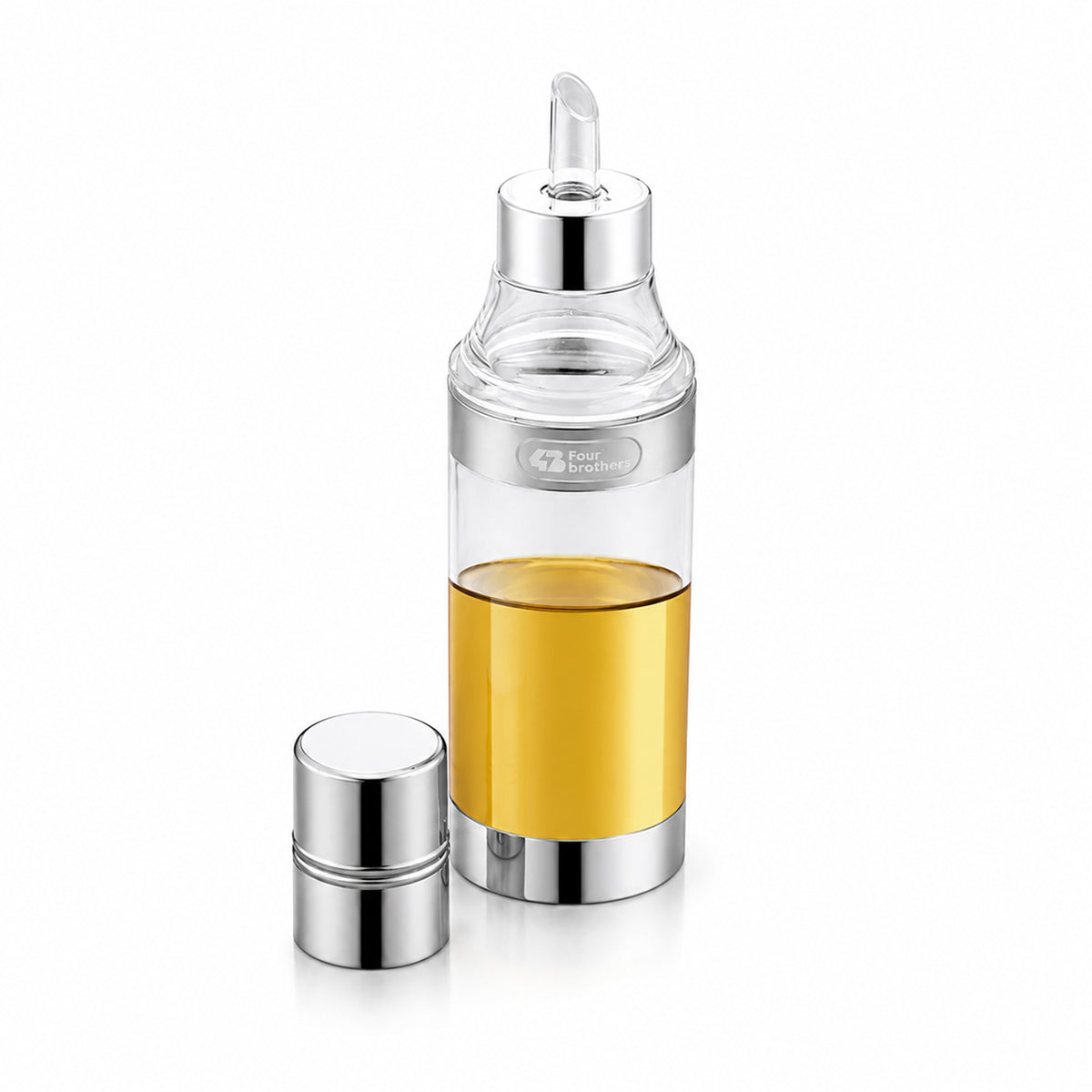
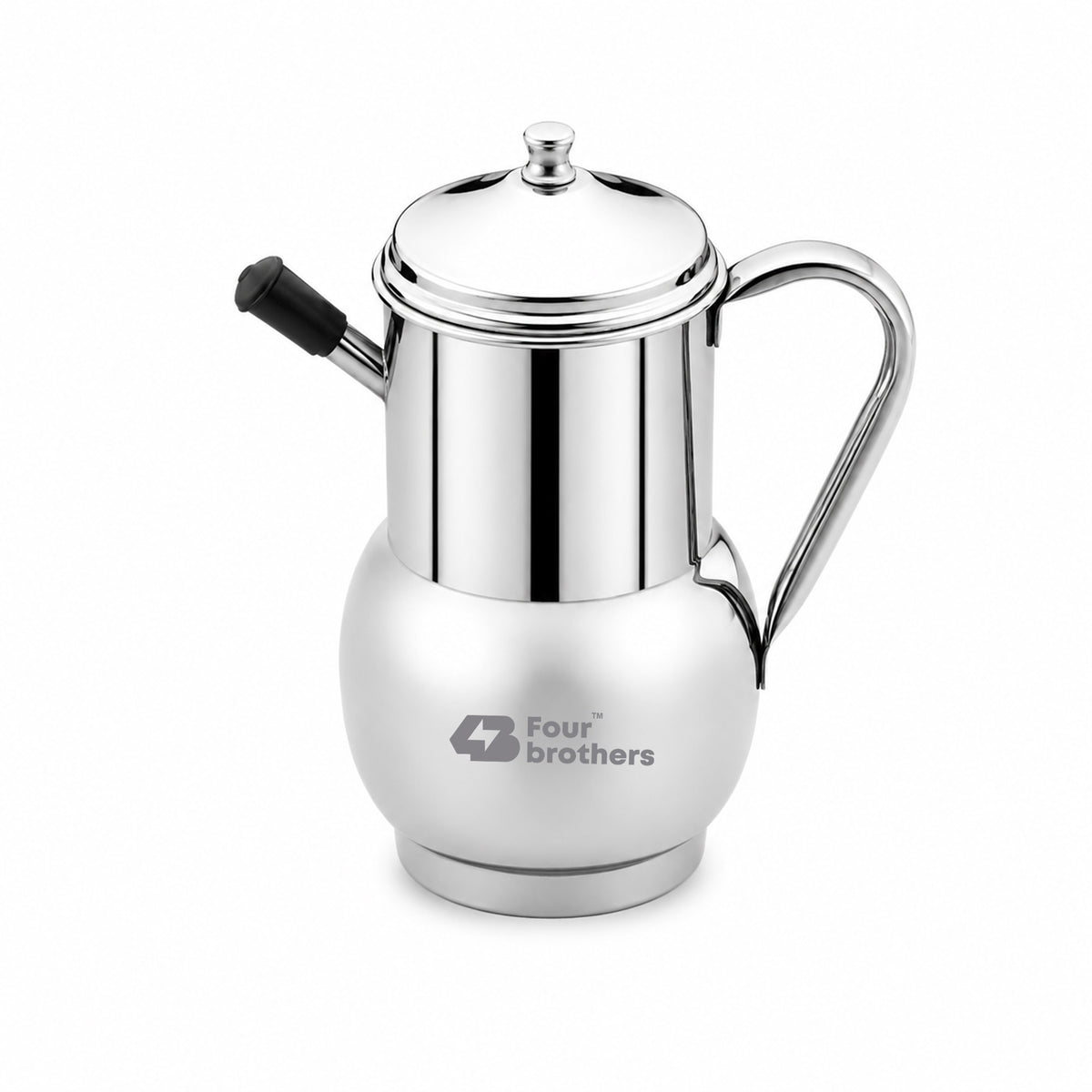
Oil Dispensers – Four Brothers
There is a second, quieter problem with oil cans too: they get sticky and greasy on the outside almost immediately, because there is no clean pour path, oil runs down the outer edge every time you use it. A proper dispenser with a lid or flip-cap nozzle keeps that mess contained to the inside, where it belongs.
Glass vs steel dispenser, which one stays cleaner over time
Once you have decided a dispenser is worth using, the next real decision is glass or steel, and the honest answer depends on how you use your kitchen.
Glass dispensers let you see exactly how much oil is left at a glance, which matters more than people expect, running out mid-recipe is a small but real annoyance. Glass also does not absorb odor or oil residue the way some materials can, so it tends to stay visually cleaner and easier to check for buildup. The tradeoff is fragility, glass can chip or crack if dropped near a stove or sink.
Steel dispensers are close to indestructible in a normal kitchen, they do not crack, do not stain, and handle daily knocks near the stove without any real risk. A stainless steel oil dispenser also tends to have a tighter seal on the nozzle over years of use, since steel threading holds up better than plastic components on cheaper glass versions. The downside is you cannot see the oil level without opening it or checking the weight by hand.
If your kitchen counter sits right next to the stove where heat and steam are constant, steel is the safer long-term choice. If your dispenser lives on an open shelf away from direct heat and you like being able to see the fill level, glass works beautifully and looks good doing it.
Simple test: how much oil is actually wasted per pour
Here is an easy way to see the difference yourself, and it takes about two minutes. Pour oil for a standard tadka, roughly one teaspoon, from a plain oil can into a measuring spoon, then wipe the can neck with a dry tissue and note how much oil transferred onto the tissue instead of the spoon. Repeat the exact same pour using a dispenser with a controlled nozzle.
Most people who try this are surprised by two things: how much oil ends up on the can neck and countertop rather than in the pan, and how much more precisely they can pour from a nozzle without even trying. Over a single meal it looks like a small amount. Multiplied across three meals a day, every day, for a year, that difference is a genuinely measurable quantity of oil, money that is currently just running down the side of your can and getting wiped away with a cloth.
Our pick by kitchen type
Daily cooking, busy household: a stainless steel dispenser with a flip-top nozzle is the most practical choice, it survives daily handling near a hot stove, needs almost no maintenance, and the controlled pour matters most when you are cooking multiple times a day.
Occasional cooking, smaller household: a glass dispenser is a good fit here, since you are refilling less often, being able to see the oil level at a glance is genuinely useful, and it sits nicely on an open shelf or counter without looking purely utilitarian.
Gifting or setting up a new kitchen: a dispenser paired with a matching ghee and oil pot with spoon makes a genuinely useful housewarming or festival gift, something that gets used every single day rather than sitting in a cupboard.
Where to buy an oil dispenser in Chennai and across India
If you are in Chennai and prefer to see materials and finish before buying, Four Brothers products are stocked across 2,100+ retailers nationwide, with a strong retail presence around the city. For everyone else, ordering online at fourbrothers.in ships pan-India, and if you already know your kitchen from our other guides, our detailed breakdown on where to buy kitchen utensils in Chennai covers the full picture, both in-store and online.
How this compares to what else is out there
Search for oil dispenser online right now and you will mostly find two kinds of content: marketplace listing pages with no real buying guidance, and generic roundup articles ranking ten random products with almost no explanation of why one design beats another. What is missing almost everywhere is a straight, practical comparison against the thing people are actually replacing, the plain oil can already sitting in their kitchen. That gap is exactly what this guide is built to close, with a comparison you can actually run yourself at home rather than a list of specs copied from a product page.
FAQs
Do oil dispensers get sticky or clogged?
They can, if the nozzle is not wiped occasionally, since oil residue does build up around any small opening over time. A quick wipe with a dry cloth every few days prevents this entirely. Steel nozzles tend to resist clogging slightly better than plastic ones since the surface is smoother and does not degrade with repeated oil contact.
Glass or steel, which is better for cooking oil?
Neither material affects the oil itself, both are inert and safe for daily cooking oil storage. The real difference is practical: glass lets you see the fill level and looks better on open shelving, steel is more durable near heat and handles daily knocks without any risk of cracking.
How often should I refill or clean my oil dispenser?
Refilling depends on your household's cooking frequency, but cleaning is worth doing every two to three weeks regardless, a quick rinse with warm soapy water prevents any buildup at the nozzle and keeps the pour smooth.
Can I use an oil dispenser for ghee as well as cooking oil?
Yes, though ghee solidifies at lower temperatures, so a dispenser with a slightly wider nozzle or a dedicated ghee pot with a spoon works better than a narrow-spout oil bottle for that specific use.
Does an oil dispenser actually save money over time?
Yes, indirectly. The savings come from reduced spillage and more precise pouring rather than the dispenser itself doing anything special to the oil, but over months of daily cooking, controlled pouring adds up to a noticeable reduction in oil consumption for most households.
About Four Brothers
Four Brothers has been making stainless steel kitchenware in India since 1975, trusted by 4.5+ lakh households and 2,100+ retailers nationwide. Browse our full range of kitchenware, including both glass and steel oil dispensers built to actually solve the spillage problem, not just look good on a shelf.
Related reading:


