

Nine days of vrat cooking is not the same as everyday cooking, even though it happens in the same kitchen with mostly the same pots. The rules are different: no onion, no garlic, no regular salt for some, only certain flours and grains, and often smaller, more frequent meals instead of the usual three. Most of the stress people feel around Navratri cooking is not about the recipes themselves, it is about not having the right setup for how differently you are cooking during these nine days.
Here is what actually helps, based on what changes in a fasting kitchen versus a regular one, not a generic festival shopping list.
Why your regular kitchen setup does not quite work for vrat cooking
During Navratri, most households cook in smaller batches, more often through the day, and keep fasting ingredients strictly separate from regular ones, sabudana, singhare ka atta, kuttu ka atta, and rock salt cannot mix with your everyday rice, wheat flour, or table salt storage. That single separation requirement is where most kitchens feel the pinch. You suddenly need dedicated small containers you were not using yesterday, and your usual large-batch pots are often the wrong size for the smaller portions you are cooking now.
The good news is you do not need to buy an entirely new kitchen for nine days. You need a handful of the right pieces, sized and shaped for exactly this kind of cooking.
Storage that actually keeps fasting ingredients separate and fresh
Sabudana needs to be soaked and stored without picking up moisture from the air, and singhare or kuttu flour goes stale fast if it is sitting in an open container. This is the one area worth getting right before day one.

A 304 grade leak-proof storage container is genuinely useful here, the tight seal keeps humidity out of soaked sabudana and stops flour from clumping, and 304 steel will not react with rock salt the way some lower-grade containers can over time.
For fridge space, where soaked sabudana and prepped fruit often end up during the day, a S.S rectangle air-ventilation fridge storage box in a large size gives you enough room for a full day's batch without cramming it into something meant for leftovers. The ventilated design also matters more than people expect, it stops condensation from building up inside, which is exactly what makes soaked sabudana turn mushy or sour if it sits sealed and wet for too long.
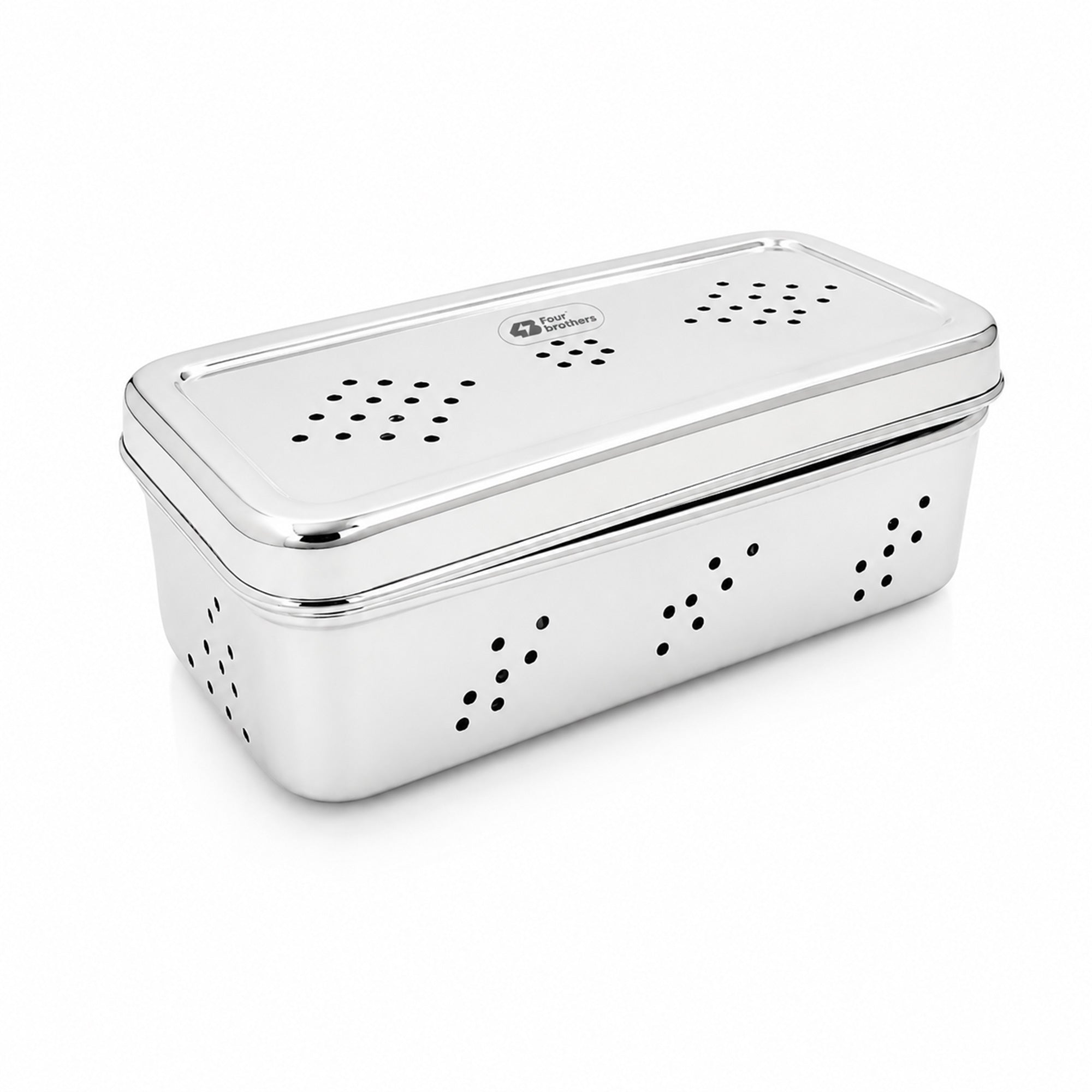
Keep these containers exclusively for fasting ingredients through the nine days, do not rotate your everyday atta back into them halfway through, that defeats the entire point of separating them in the first place.
A thali set that actually suits smaller, more frequent meals
Vrat meals tend to be smaller and more frequent than a regular lunch or dinner, a small bowl of sabudana khichdi mid-morning, fruit in the afternoon, a proper meal in the evening. Trying to serve all of this on your regular everyday plates usually means either too much plate for too little food, or resorting to random bowls that do not match.
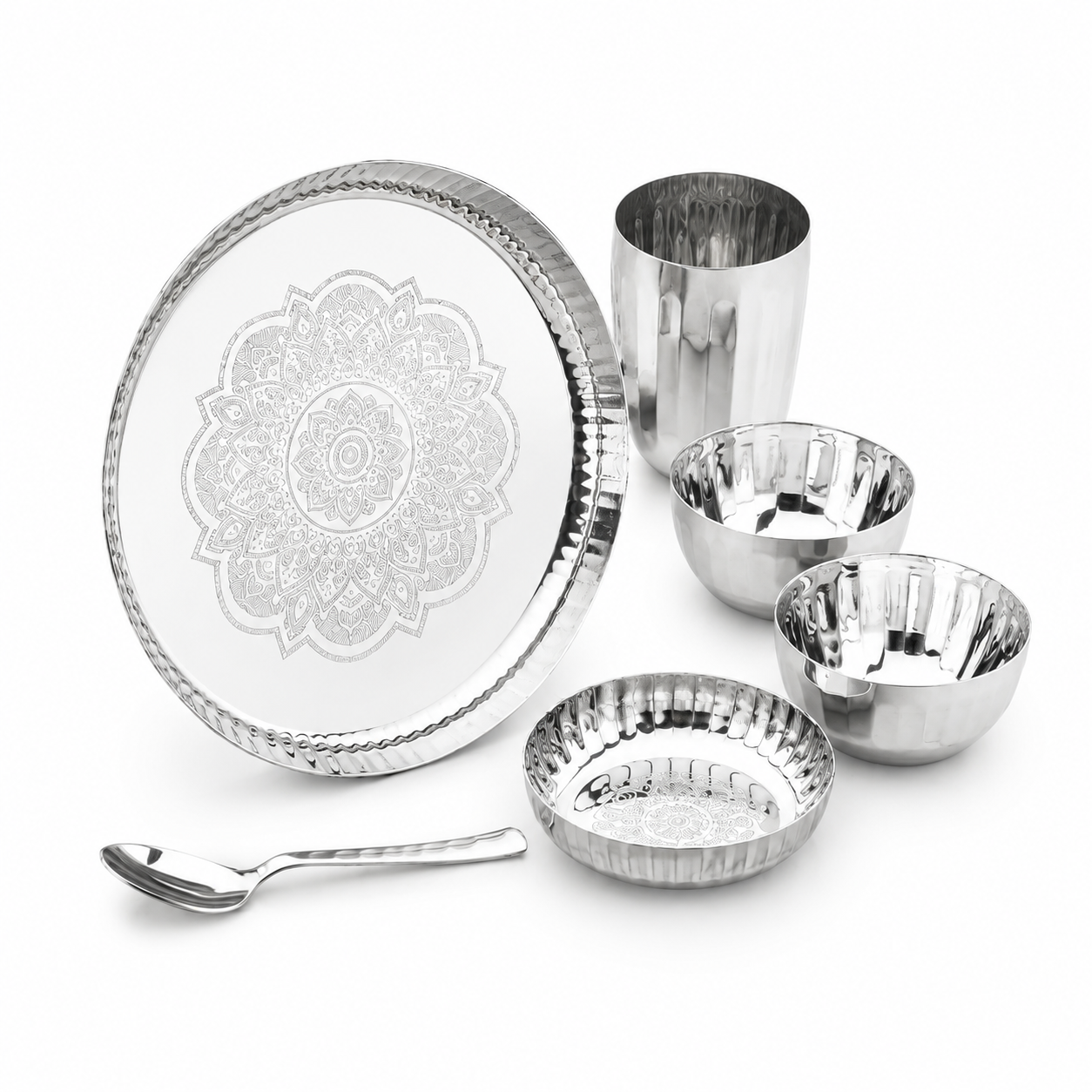
A stainless steel thali set with separate compartments solves this neatly, small portions actually look and feel complete instead of lost on an oversized plate, and having a dedicated set means you are not second-guessing whether a bowl was used for something non-fasting earlier that day. It also plates well for the fruit and dry fruit combinations that are common through the nine days, each compartment keeping items separate rather than everything sliding together.
Small-batch cooking tools that save you from constantly re-cooking
Because vrat meals happen more often through the day, your large everyday kadai or pot is frequently the wrong tool, too much surface area for a small portion means uneven cooking and more oil or ghee than you actually need.
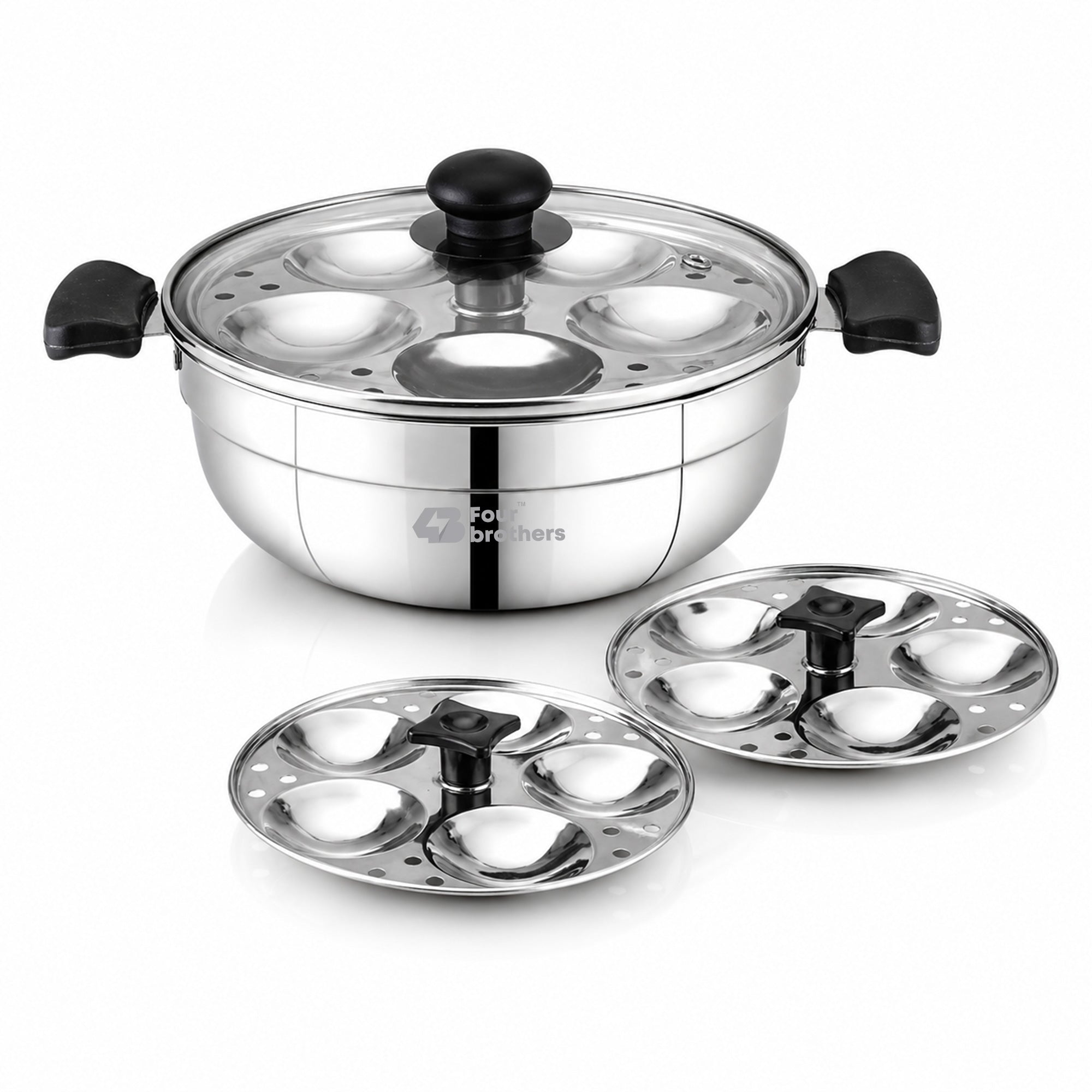
A compact smart multi kadai with an idly pot steamer insert is worth having out through Navratri, it handles small-batch sabudana khichdi or a quick vegetable roast in the same pan, and doubles as a steamer if you are making anything that needs gentle, moist heat instead of direct frying.
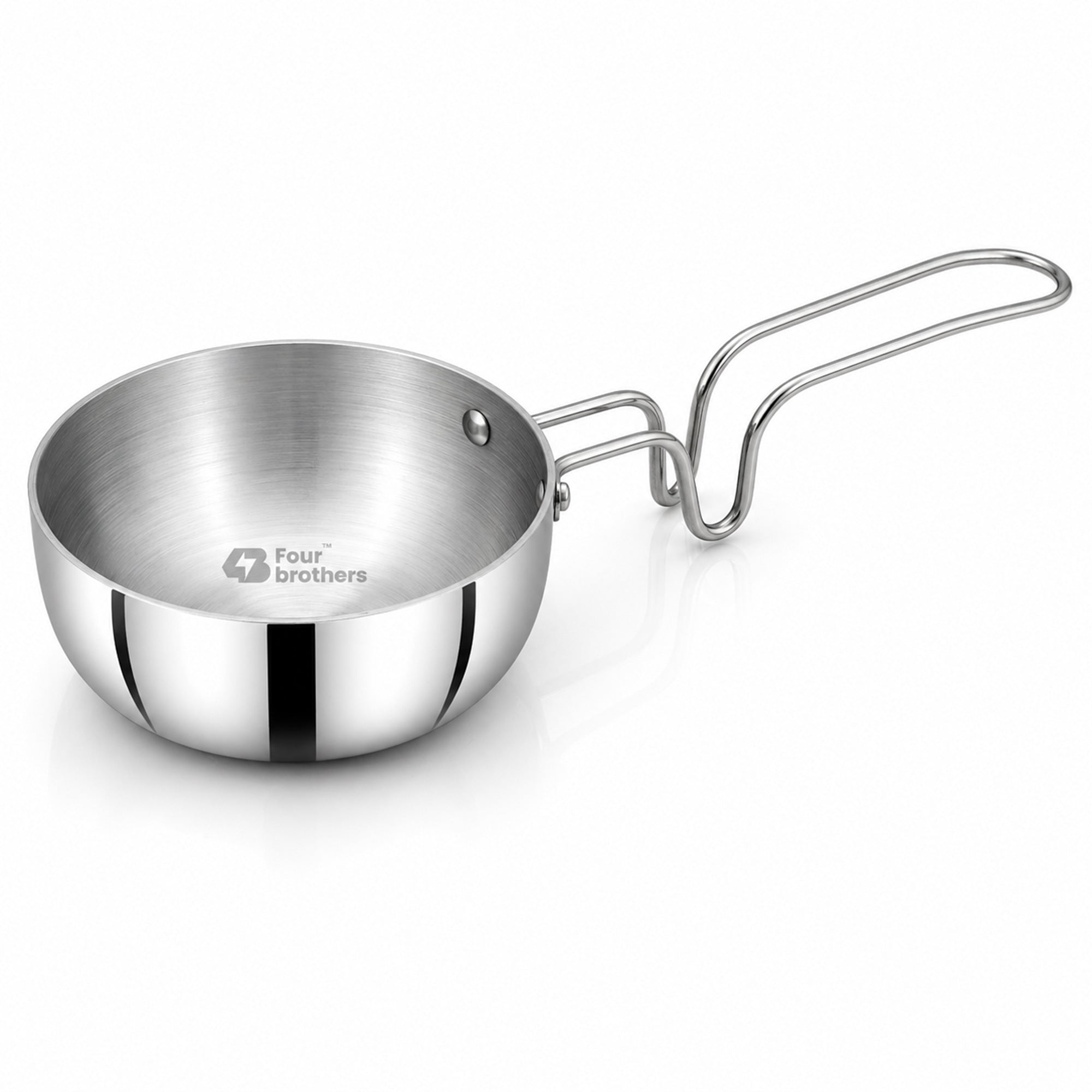
For the cumin-and-curry-leaf tempering that goes into most sabudana and kuttu preparations, a light tadka pan heats fast and cools down just as quickly, which matters when you are tempering for a single small serving rather than a full pot.
Cleanup between fasting and regular cooking, without cross contact
If your household has some members fasting and others eating normally, the biggest practical headache is avoiding cross contact, a pan used for regular onion-garlic cooking should not go straight into fasting food prep without a proper wash in between. Keep a mental (or literal) separation: designate specific pieces, ideally the smaller kadai and tadka pan above, exclusively for fasting cooking through the nine days, and wash them promptly after each use rather than letting them sit in a mixed sink with regular dishes.
Steel and aluminium both clean up easily with just warm water and a mild wash, no special cleaning products needed, which matters when you are already cooking more often than usual and do not want cleanup eating into your time too.
What most Navratri shopping guides get wrong
Search around for Navratri kitchen essentials right now and most results are either fasting recipe roundups with no mention of what to actually cook them in, or generic festival shopping lists focused on clothes and decor with a token kitchen mention at the end. Almost nothing addresses the real day-to-day friction of vrat cooking, the need for separated storage, smaller cookware for smaller batches, and a practical way to avoid cross contact in a mixed-fasting household. That gap is exactly what this guide is meant to close.
FAQs
Can I use my regular kitchen containers for fasting ingredients?
You can, but it is not ideal. Sabudana, kuttu atta, and rock salt do best in containers used only for them during the nine days, since cross contact with regular flour or salt residue can affect both taste and the strictness some households follow around fasting food.
How do I stop sabudana from turning mushy after soaking?
Soak it in just enough water to cover the sabudana, drain any excess before refrigerating, and store it in a ventilated container rather than one that is fully sealed. Trapped condensation is usually what turns properly soaked sabudana sour or mushy by the next use.
Is stainless steel safe for rock salt and fasting-specific ingredients?
Yes, 304 grade stainless steel does not react with rock salt or fasting flours the way some lower-grade metals can over prolonged contact, which is part of why it is a safe long-term choice for this kind of storage.
What is the easiest way to avoid cross contact in a mixed-fasting household?
Set aside a small, specific set of cookware, ideally a compact kadai and a tadka pan, used only for fasting meals through the nine days, and wash it immediately after each use rather than letting it sit with regular dishes.
Do I need special cookware for vrat cooking, or will my regular pots work?
Your regular pots will technically work, but smaller cookware genuinely helps, since vrat meals tend to be smaller and more frequent, a large kadai or pot is often oversized for the portions you are actually cooking, leading to uneven heat and more oil or ghee than needed.
About Four Brothers
Four Brothers has been making stainless steel kitchenware in India since 1975, trusted by 4.5+ lakh households and 2,100+ retailers nationwide. Browse our storage collection for fasting-friendly containers, our tableware collection for thali sets, or our cookware collection for small-batch kadais and pans built to handle exactly this kind of cooking.
Related reading:


